Gotta Garden

Friday, February 09, 2007

Garden Education: Amy Stewart Speaks at USBG

Yesterday was a good day (except for the jury summons awaiting me upon my return home…but let’s not go there). I began my trek into DC around 10:00 a.m. (one must allow plenty of extra time in this part of the world for uncertain traffic) for a 1:30 p.m. lecture at the US Botanical Gardens. Everything went remarkably smoothly and I found my way to the USBG by 1:00 p.m. This was quite nice as it allowed me to poke around and take pictures of the orchids (which I’ll post later…stand by!), amaryllis and other goodies.

However, the main event was the opportunity to hear and see the gardening blogworld’s own Amy Stewart. Having read From the Ground Up: The Story of a First Garden, I still feel gratitude toward Amy for freeing me from the guilt of houseplants. It was a Eureka moment that fostered an enduring warm feeling. So, I know that Ms. Stewart is much more than a superlative blogger; she is an accomplished and noteworthy author. She brings a certain élan to the gardening blogosphere that radiates outward.

<span class=

It was with anticipation that I looked forward to hearing and learning about Flower Confidential: The Good, the Bad and the Beautiful in the Business of Flowers, her latest work. I was not disappointed. We were treated to sumptuous slides of her journey and research that resulted in this discourse. I suppose I hadn’t really thought about the business aspect of flowers before. It was intriguing to have a window into this world and a guide as well.

We, the audience, journeyed with Amy to Ecuador, Columbia, Miami, New York City, Africa and California (maybe more, that’s as much as I remember). It was thought provoking to consider the flowers we purchase as traveling such great distances, even those supermarket flowers that tempt us on occasion. We were shown the process and processing these flowers endure before we plunk them into water at home. Even some sympathetic glimpses of the workers who make it happen, although I did wonder later if these are state owned endeavors or some private individual’s or a corporate enterprise. It seems it is a familiar story of underpaid workers and, in this industry, workers exposed to chemicals used in treating the flowers.

One thing you learn traveling overseas is that it is never as simple as it appears (especially from afar). Ms. Stewart pointed out that the workers need and want these jobs, so boycotting what might seem to be somewhat exploitive situations would only hurt the individuals such action might seek to help. Still, there were bright spots, places where natural techniques are employed because they are a way of life. And, it is not just Americans (maybe not even the majority) buying these flowers, but large portions of the rest of the world. New labeling is making its way to the market to enable consumers to know exactly where the flowers were grown or imported. With that knowledge, you as a consumer can make choices about what you support.

Glimpses into the flower markets were feasts for the eyes. In Holland, we learned about and saw the famous flower auctions. It was surprising to learn that the Dutch are exporting a large portion of the actual growing these days, choosing environments that have a year round ability to grow and produce. Seeing plant starts in tiny dishes for export and shipment was, as Amy points out, rather startling. The plant industry has moved ahead in leaps and bounds. Our flowers are grown in state of the art greenhouses where everything is controlled precisely and the result is a superior (at least for the cut flower industry) product.

The lecture concluded with questions from the audience. Amy then graciously signed books (available for purchase at a reasonable $20) and allowed photos. Here’s my moment of her signing my book:

<span class=

We also were given tulips as we left. It was very nice gesture. My two tulips made a long journey back home (around 5:00 pm) and I noticed they were rather the worse for wear. Both were in an upside down u position. I remembered Amy telling us that flowers were tougher than we thought and that properly prepared ones were fed before transport. I took these two and stuck them in water. They looked rather sad and my husband said, “I only see one; where’s the other?” It was hiding, I think, but it was there. I should have taken a picture because you wouldn’t believe the transformation this morning:

<span class=

You wouldn’t have guessed these were the same tulips! Anyway, thanks, Amy, for a most enlightening talk and for the (now) gorgeous tulips! If the Flower Confidential tour is coming your way, definitely stop by.

(And now…I’m off to read my…ahem…signed copy!)

Monday, February 05, 2007

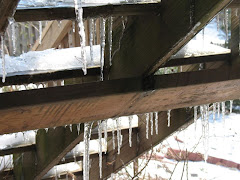
Weather: VERY low temps tonight

We're supposed to get down to single digits tonight, predicted to be 5 or 6 degrees. Fortunately, we don't get many of these and some years we don't get any. Makes us get a bit complacent and grow things that are marginal! We've had lows in the teens for a number of nights now and will continue for a bit. The good side to that is the bugs and weeds that will be gone and hopefully the new scourge of my life, i.e., daylily rust.

Anyway, I'm pretty much counting as gone my lantana. I've enjoyed it for three summers (so it has overwintered twice for those that are wondering), but I would think these constant low temps have done it in...and tonight for sure. I was going to add extra mulch to it (as it sits on a bit of a slope and tends to lose its mulch) and the cannas (a clump of Cleopatra that I've had for four or five years), but the bags of mulch were frozen...so, that's a no go. Cannas around here have always been iffy (typically zone 8 and we're zone 7) but we get spoiled with having them for a few years and then a night like tonight arrives. I did mean to give them a good mulching like the lantana, but oh well. They are sited on the south side of my house but the lack of a good mulch has me worried. We shall see!

On the positive side, I covered both my gardenias, my pride and joy tea olive, the camellias, the loropetalum, the clematis armandii, my banana shrub and neighboring butterfly ginger. I also brought into the garage most of the pot ghetto and covered the daylilies in pots that still remain outside. My Butterfly Japanese Maple resides in a pot and I thought I would take it in, too...but it has rooted and so I wrapped it up as well. The banana shrub and butterfly ginger are really iffy, but they are both sited facing west against the white wall of my home...probably the best microclime that I have and they were mulched well. The banana shrub is in its third winter, so my fingers are crossed. This is only the second winter here for the butterfly ginger. I actually had a variegated confederate jasmine overwinter here (which I later lost, doggone it), so I know the spot is considerably warmer. The last worrisome plant is my fig...but, it is on its own, too (has overwintered twice).

For someone who considers herself a no fuss gardener, I seem to have taken some pains with a few spoiled plants! Well, we all have our weaknesses! The rest of the gardens are on their own. I saw in the backyard that some of the garlic has been disturbed (critters...probably cats or squirrels or cats going after critters), so we'll see just how tough that is (I know garlic is pretty tough...but I'm sure even it would appreciate the mulch that has been lost.).

Okay, I've done what I could...we'll see the results in spring.

Garden Tips: Throw Away Catalogs No More

Joe Eck, from the Horticulture symposium I previously posted about, mentioned this during the Q & A that followed the presentations. He said they use all the catalogs that arrive in the mail on their garden pathways. They put them down and cover them with a layer of straw. A year later (or whenever), they lift the straw and have earthworm enriched soil to add to the beds. Then, the process begins again. As to the ink, he said it is all soy based now. They even use magazines which surprised me. It's worth trying, don't you think?

Sunday, February 04, 2007

Garden Trips: IRELAND Dublin Bontanical Gardens May 06

Since it is Sunday, here's some for Green Thumb Sunday:

Image Hosting by PictureTrail.com

Image Hosting by PictureTrail.com

Image Hosting by PictureTrail.com

You can see many more of my photos from the Dublin Botanical Gardens here:

Saturday, February 03, 2007

Garden Education: Horticulture Symposium Feb. 3, 2007

Lewis Ginter Bontanical Garden located in Richmond, Virginia, was the host and a co-sponsor of this year's The Great Garden Debate symposium with Horticulture magazine. Horticulture magazine sponsors a symposia series yearly in selected locations around the country.

Starting promptly on time, the event opened with Nan Blake Sinton, Director of Programs for Horticulture magazine, introducing the speakers. She presented a slide program of some beautiful and intriguing gardens around the world that she has visited, whetting our appetite for the lectures to follow. Her challenge to them: When collector meets designer, can they find common ground?

First up was Joe Eck of North Hill Associates whose task was to give us the design approach. Mr. Eck immediately issued a disclaimer that he, too, is a plant collector, lest we, in the audience, think he had a preference for design over plants. The audience chuckled with him; and from that moment on, the audience was his. From a stunning multi level garden in New Hampshire filled with a collector's plants from alpines to epimediums to rare trees, we saw and learned how landscaping can blend in the garden. Antique Chinese troughs filled with the owner's alpine collection were only the first of at least three levels in this garden. An extremely challenging site was revealed as a masterpiece of design to contain enormous collections.

From New England, we went south and viewed a garden contained within walls of corrugated metal linking the garden with historic structures already on the site. Another farm estate revealed gardens designed to provide a retreat from the large scale farming going on all around it. San Diego was the site of an estate surrounded by other estates; however, Mr. Eck created a haven with full size olive trees and other plantings needing little water that completely shut out the intrusive neighbors. In all the gardens presented, locally available products/stones/plants were incorporated into the projects to link them and make them one with the land. All of these wonderful gardens were able to convey privacy in challenging environs.

A break was given at this point as an opportunity to stretch and to buy books. If anything was disappointing at this event, it was the book sale. It was astonishing that Messrs. Eck and Winterrowd's books A Year at North Hill: Four Seasons in a Vermont Garden and Living Seasonally: The Kitchen Garden and the Table at North Hill were not available for sale (and signing!). None of Christopher Lloyd's books were available either. However, there were others, such as: Roses: A Celebration, Elements of Garden Design, and Annuals and Tender Perennials for North American Gardens.

Next up was Mat Reese, Assistant Head Gardener at Great Dixter (the late Christopher Lloyd's famous garden). Mr. Reese presented a moving tribute to Mr. Lloyd (Christo to his friends, apparently) as the ultimate plantsman and gave the history of Great Dixter. We learned of Christo's contributions and innovations to the family gardens. Slide after dazzling slide was viewed with eye popping color and combinations to stimulate your senses. Succession garden was not just explained but viewed in numerous examples. Seeing the long border each month from March through October was simply brilliant (to borrow some lingo!). We were ready to book flights to England to experience Great Dixter first hand after Mr. Reese's slide tour.

A question and answer session and then lunch was on the agenda. As usual, Lewis Ginter served delicious bag lunches (four choices) that were eagerly consumed.

The symposium resumed with the delightful and very humorous talk given by Carol Reese. Ms. Reese, of the University of Tennessee, had the audience laughing out loud with photographs of garden whimsy. We viewed garden havens as small as a groups of pots to full size gardens. Her eye for the unusual and the interesting helped develop our own appreciation for unique gardens. Some "don'ts" of home landscaping were also included for our edification (watch those boring shrubs dotting the front of homes).

Wayne Winterrowd was the final speaker and as he acknowledged, it was tough to follow the previous speakers. However, he was more than up to the job. His subject was 'When Obsession Takes Over: Ideas toward Organizing a Mad Mania for Plants'. As you might imagine, the visual treats were many. Personal favorites were views of his own garden at North Hill. The snowdrop collection and daffodil drifts/collection were impressive. Of course, everything he presented was a visual delight from the extraordinary vegetable gardens, the shade gardens, the stream gardens, planted walls and the pergola gardens.

All of the speakers were available for questions, both midway and at the end, and their candid answers were much appreciated. This was a most enjoyable way to spend a Saturday and attendees could not help but leave enthused, stimulated and eager to garden.

Highly recommended!
Related Posts with Thumbnails